
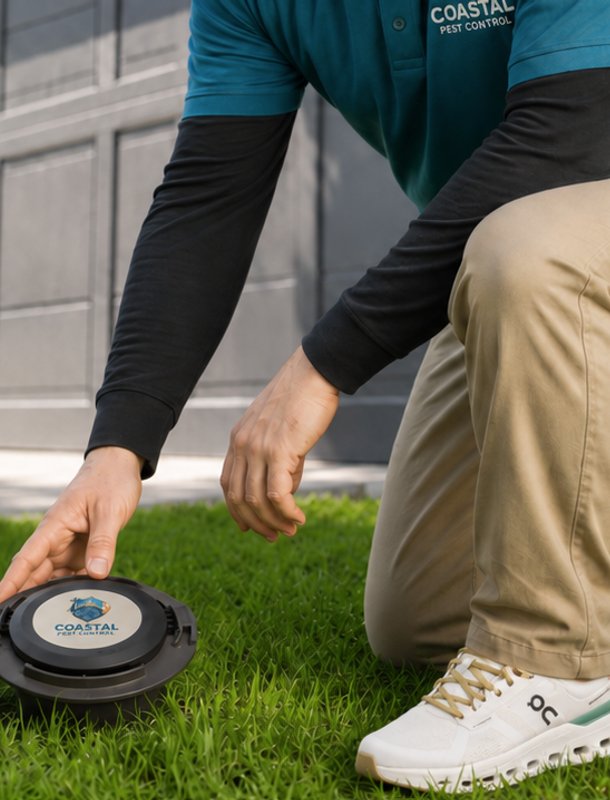
Coastal Living Requires Proactive Termite Protection
Proactive protection. Local experts. Lasting peace of mind.
Termites are a natural part of the coastal environment—but they do not belong inside your home. The warm temperatures, humid conditions, frequent rainfall, sandy soils, crawlspaces, landscaping, and moisture common throughout the Grand Strand can create favorable conditions for subterranean termite activity.
Because these termites live and travel primarily underground, they can remain hidden while foraging around or beneath a structure. By the time visible signs appear, termites may have already been active for an extended period.
Coastal Pest Control offers professional termite monitoring and baiting solutions designed to provide ongoing protection against subterranean termites—including the more aggressive Formosan subterranean termite found in parts of South Carolina.
Schedule An Inspection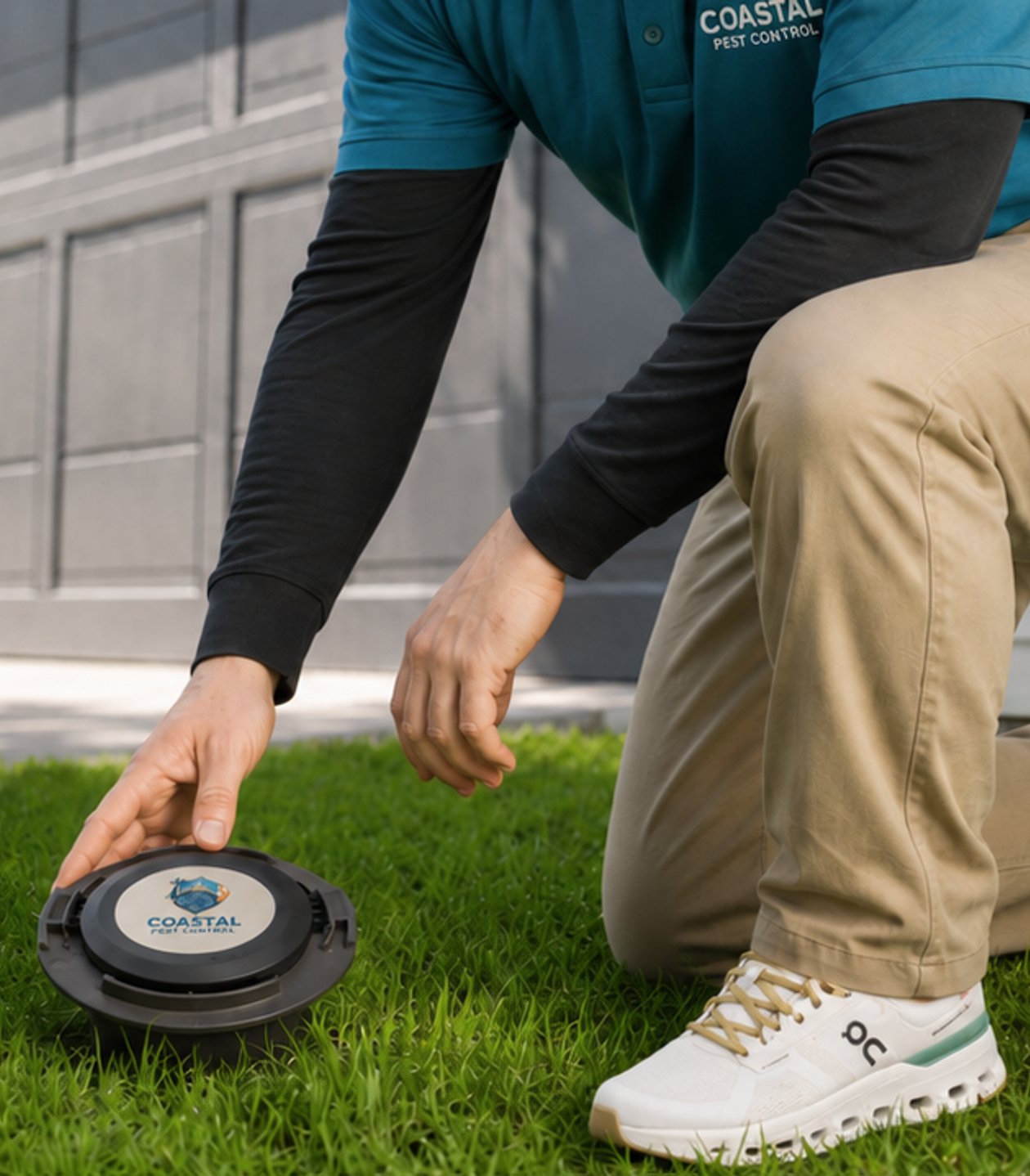
Active Termite Protection From Day One
Active Protection

Annual Monitoring
Colony Elimination
Minimal Disruption
Re-Treatment Protection

Why Termite Monitoring Matters in Coastal South Carolina
Clemson University reports that subterranean termites are responsible for most termite-related structural damage in South Carolina.
These termites live in underground colonies and travel through the soil in search of cellulose-based materials such as wood, paper, cardboard, roots, and structural lumber. The Formosan subterranean termite—an invasive species known for its potentially large colonies—has also been documented in Horry County and other coastal areas of the state.
Moisture & Humidity
Persistent soil moisture, high humidity, frequent rainfall, and storm activity are constants along the Grand Strand, and all of them favor subterranean termite activity.
Wood-To-Soil Contact
Mulch installed against foundations, landscaping timbers, tree stumps, and buried wood give termites a direct path from the soil to your structure.
Crawlspaces & Drainage
Moist crawlspaces, poor ventilation, and plumbing, irrigation, or drainage issues keep the soil around your home damp throughout the year.
Structural Openings
Cracks and expansion joints in foundations—along with additions, patios, and other construction changes—create the small gaps termites travel through. They do not need a large opening to get in.
 Moisture & Humidity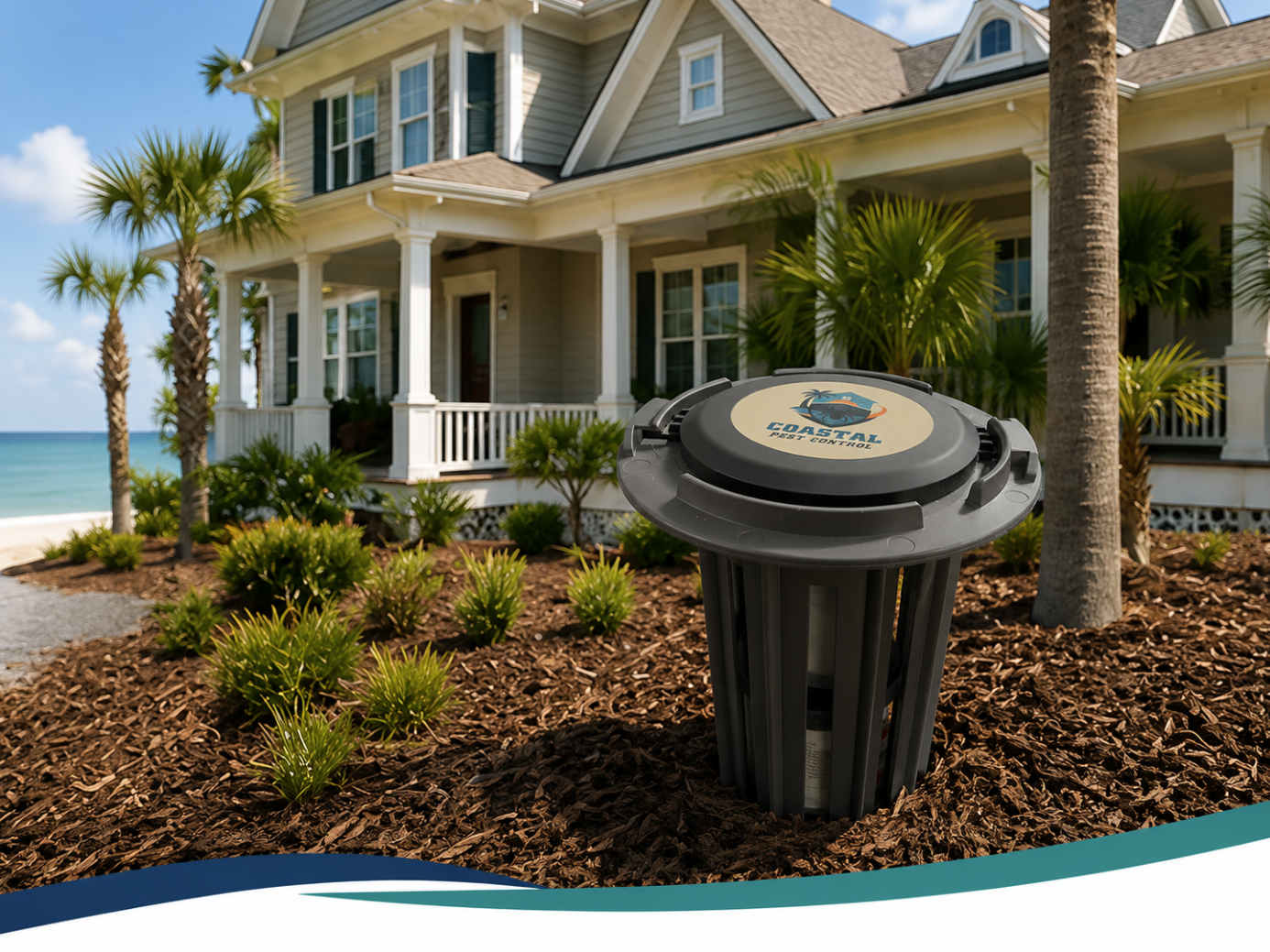
Trelona® ATBS® Bait Stations
Coastal Pest Control uses the Trelona® ATBS® Annual Bait Station system from BASF as part of our subterranean termite protection program.
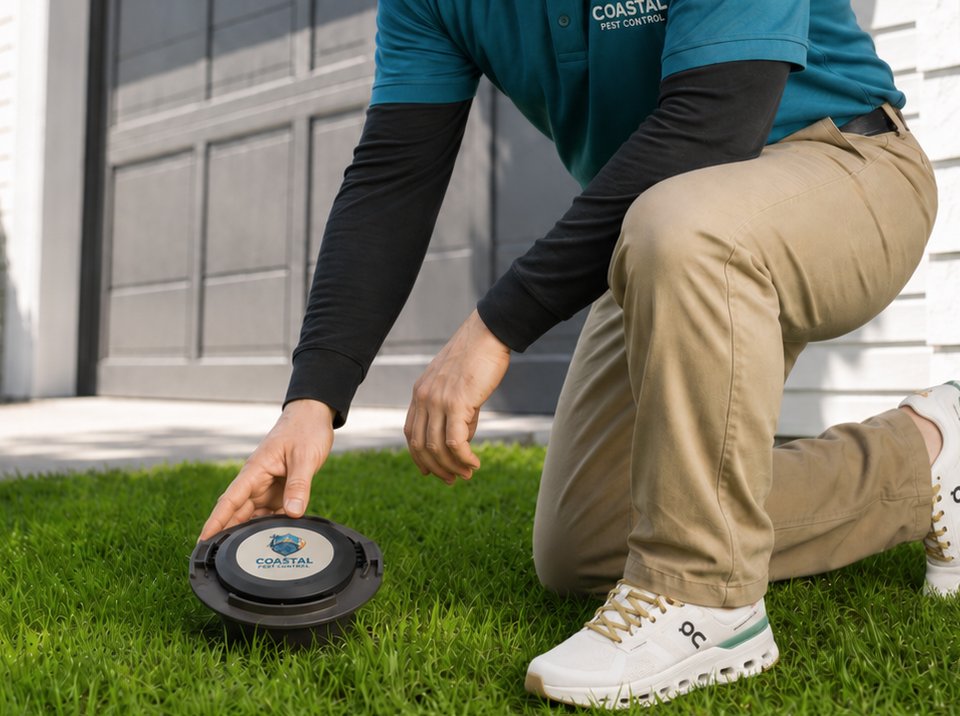
Stations are installed in the soil around the exterior perimeter of the structure, where their design encourages foraging termites to enter and feed. Unlike a monitoring-only system that waits for termite activity before an active ingredient is introduced, Trelona ATBS stations contain active termite bait at the time of installation.
The active ingredient, novaluron, disrupts the termites’ molting process. Foraging termites feed on the bait and share it throughout the colony, helping the treatment reach termites that may never directly enter a station. The objective is not simply to kill individual termites near the home—it is to eliminate termite activity at the colony level.
Active Protection From Installation
Every station is equipped with active bait when installed. Your system does not have to wait for termites to be discovered before the baiting process can begin.
Designed For Termite Foraging
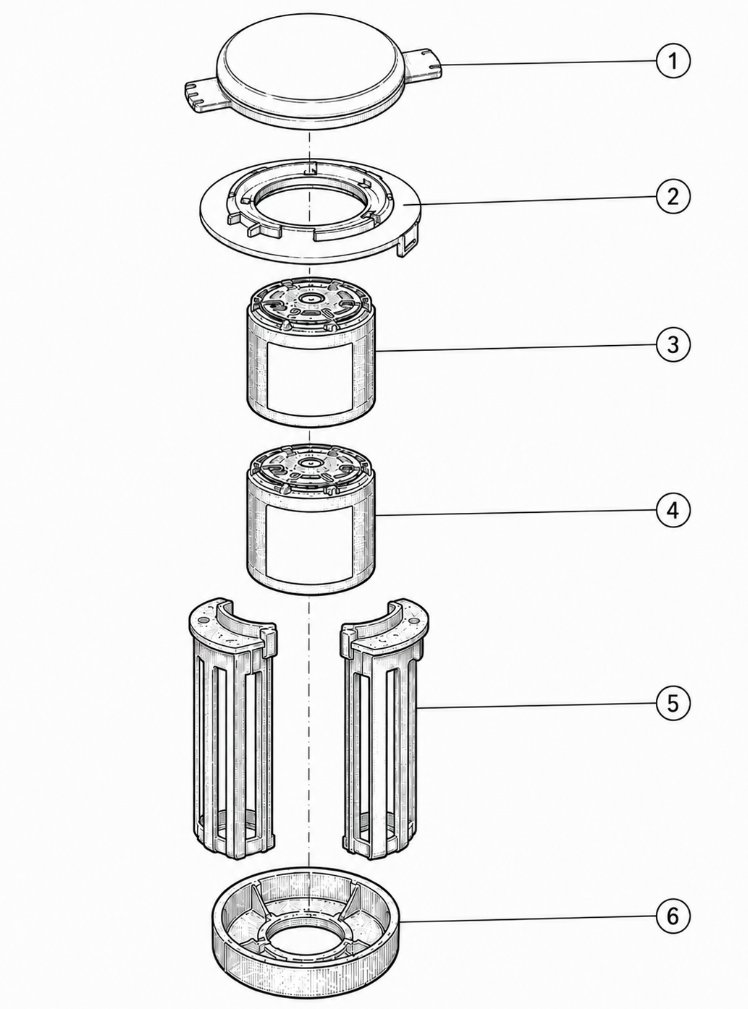
The stations feature a larger design with vertical openings intended to create favorable conditions for termite entry and feeding.
Colony-Level Control
Novaluron is an insect growth regulator that interferes with the termites’ ability to molt. Because termites share food throughout the colony, the bait is carried well beyond the station itself.
Minimal Disruption To Your Property
Installation generally does not require extensive trenching, drilling, or large-scale chemical applications. Stations sit discreetly in the soil, nearly flush with the surrounding ground.
Professional Annual Monitoring
During the annual service we evaluate the stations, check for termite activity, assess bait condition, and replace components when necessary—more often when conditions warrant closer attention.
Our Termite Protection Process
- 1
Inspect
We inspect accessible areas of the property, evaluate visible termite activity, and document conditions conducive to infestation.
- 2
Install
Trelona ATBS stations are professionally installed and strategically placed around the perimeter of the structure.
- 3
Protect
Stations contain active bait from the beginning, so the system provides protection as soon as installation is complete.
- 4
Monitor
We inspect the stations annually, assess bait condition, replace cartridges when required, and document our findings.
- 5
Re-Treat
If covered subterranean termite activity is discovered while your agreement is active, we perform additional treatment as outlined in the agreement.
Termite Questions, Answered
Straight answers about bait stations, monitoring, and what our termite plan does and does not cover.
Stations are installed in the soil around the structure where subterranean termites naturally forage. Termites enter the station, consume the bait, and share it with other members of the colony. The active ingredient interferes with the termites’ development and is designed to eliminate colony activity over time.
Trelona ATBS stations contain active bait when they are installed. However, termites must locate and feed from a station before the bait can affect the colony. The amount of time required can vary based on termite location, soil conditions, colony behavior, weather, station placement, and other property-specific factors.
The stations are installed in the soil and generally sit close to ground level. They are designed to remain discreet while still being accessible for professional inspection and servicing.
Trelona ATBS is labeled for annual inspections. Coastal Pest Control may recommend or perform additional inspections when active termites, structural conditions, environmental changes, or other concerns justify more frequent monitoring.
Trelona ATBS is labeled for subterranean termite protection, including Formosan subterranean termites. Treatment recommendations may vary depending on the location and severity of an active infestation.
No. A baiting system targets foraging termites through strategically installed stations. A liquid treatment creates treated zones in the soil or selected areas of the structure. In some circumstances, a professional may recommend localized or supplemental treatment in addition to a baiting system.
No. Coastal Pest Control provides a re-treatment-only termite program. If covered subterranean termite activity is discovered while the agreement remains active, we will perform additional treatment as outlined in the agreement. The program does not provide reimbursement for structural repairs, replacement materials, cosmetic damage, loss of use, or other expenses associated with termite damage. Please review the termite service agreement for complete coverage terms, exclusions, renewal requirements, and property-owner responsibilities.
Yes. Moisture correction and termite protection serve different purposes, but both are important. Plumbing leaks, drainage issues, damp crawlspaces, wood-to-soil contact, and excessive mulch can create conditions favorable to termites and should be corrected whenever possible.
Transferability, station ownership, inspections, and continued coverage are governed by the service agreement. Contact Coastal Pest Control before the sale so we can explain the available options and document the status of the system.
Trelona®, ATBS®, Advance®, and BASF® are trademarks of BASF. Coastal Pest Control is an independent pest management company and is not owned by or affiliated with BASF. Product use is subject to the pesticide label and applicable federal and state regulations.
Let's Protect Your Home
Whether you need immediate help or want to explore long-term protection, we’re ready to assist. Our team provides fast support, honest guidance, and reliable pest solutions.
- Call Or Text (843) 278-PEST (7378)
- Email Click To Email
- Location Myrtle Beach, North Myrtle Beach, Conway, Surfside Beach, Socastee


